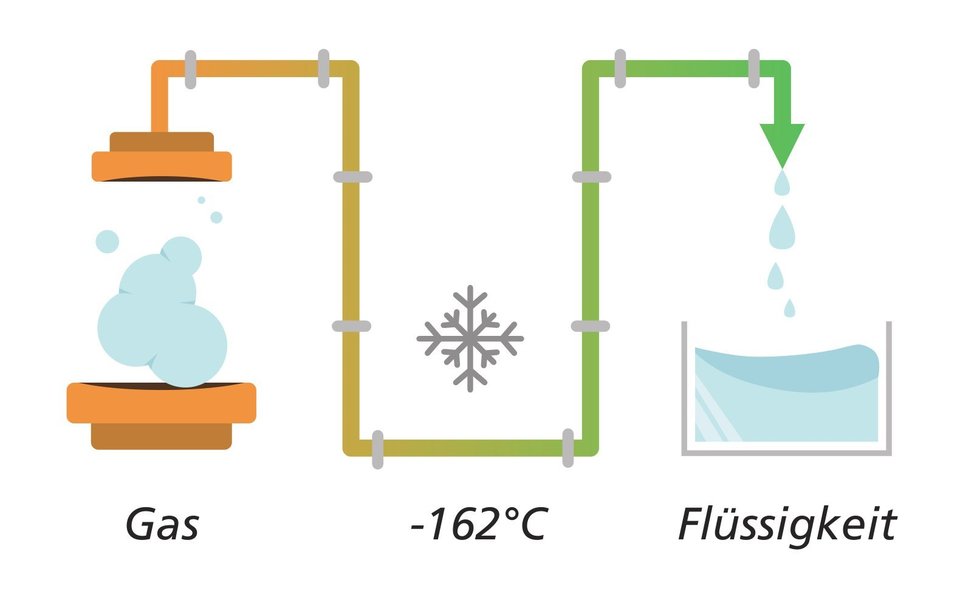
LNG (liquefied natural gas) is a natural gas which is liquefied by cooling it to -160°C. This cooling reduces the volume by a factor of 600, allowing a great deal of energy to be stored in a small space.
LNG is mainly extracted from areas where large natural gas deposits have been discovered. Countries where LNG is produced include Trinidad, Nigeria, Algeria, Qatar, Indonesia, Malaysia and Australia.
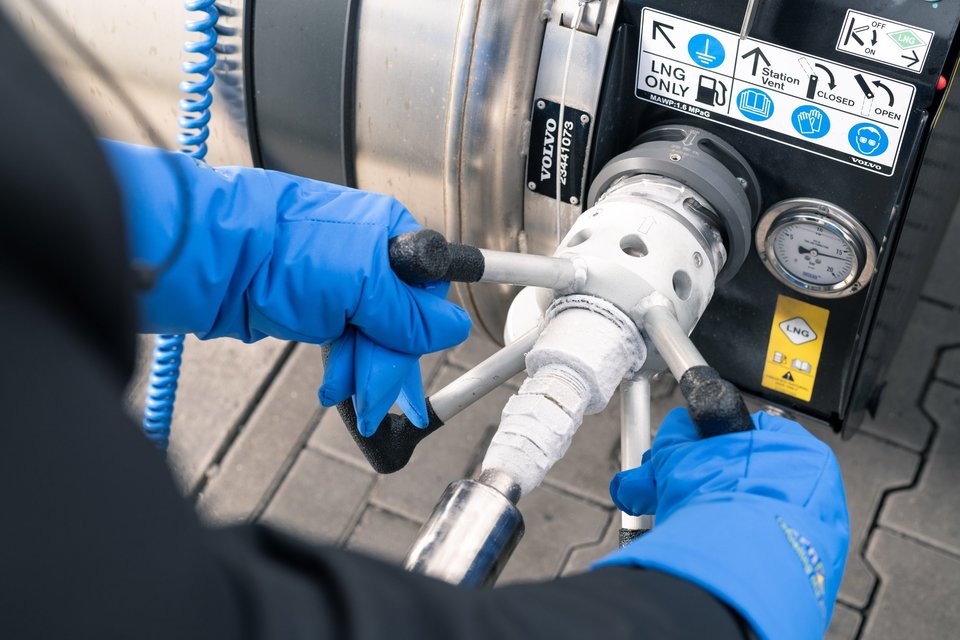
The fuel is considered very safe and has been tested worldwide for years. LNG is a clear and odourless liquid and is non-corrosive, non-toxic and not dangerous for our groundwater. LNG does not float, does not mix with water and does not penetrate into the soil. As a result of its low temperatures, drivers wear protective gloves, goggles and clothing that covers the body.
The car manufacturer Volvo has produced a very clear video:
If there is an accidental escape or spillage of the fuel, it evaporates immediately without leaving any residue, making it harmless to people and the environment. It is flammable only in its gaseous state and only if there is a certain air-gas ratio (air must consist of 5-15 % natural gas) and there is an ignition source in the immediate vicinity.
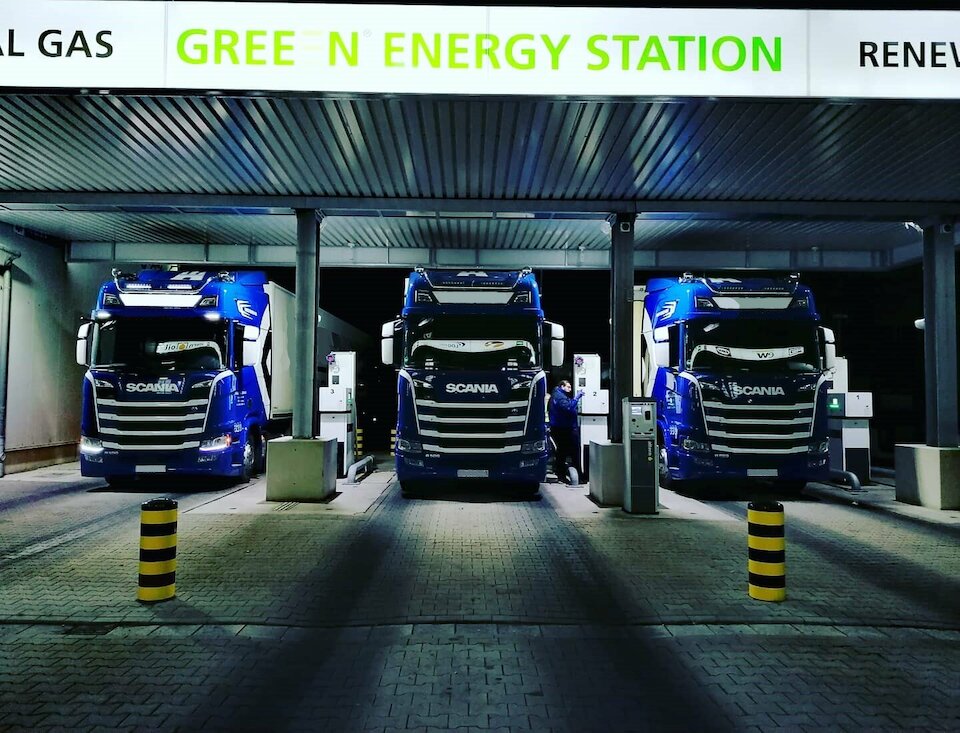
Natural gas has already been tried and tested as a fuel for years, because there are millions of cars on the road worldwide that run on natural gas. In China and the USA, thousands of LNG HGVs are already on the roads. The climate-friendly fuel is also gaining ground in Europe. Many LNG vehicles are already in use in the Netherlands and Italy, and in Germany the expansion of the LNG filling station network is progressing steadily, as more and more hauliers want or are switching to LNG.
An overview of all LNG filling stations in Germany (in operation and in planning) is provided by our partner - the German Energy Agency.
People often get confused between liquefied petroleum gas (LPG) and LNG. LPG (Liquefied Petroleum Gas) consists of propane (C3H8) and butane (C4H10) and is used mainly for domestic and commercial applications (including passenger cars). LPG is liquefied under high pressure.
LNG is under atmospheric (normal) pressure and is liquefied by extreme cooling. It is lighter than air and evaporates directly on discharge. The components of LPG, on the other hand, are much heavier than air.
The different properties result in different storage methods (different material properties, thicknesses and insulation). The prevailing standards for working with LNG also differ from those for LPG.
LNG comes from regions with very large gas reserves. It is delivered to the port terminals in special tankers. In order to guarantee the supply of gas, we procure LNG from several terminals, such as Rotterdam and Zeebrugge. Our logistics partner transports the LNG using special ISO containers and trailers, by rail and road, so that an individual supply of our customers and filling stations is guaranteed.
To liquefy 100 m³ of natural gas, about 10 m³ of natural gas are required. This amount of natural gas is used cost-efficiently, directly at the source.
Yes, energy can be needed to keep LNG liquid. If LNG is stored for a long period of time, the liquid can heat up and thus become gaseous again. In this case the LNG is cooled down with the help of nitrogen.
No additional energy is required for this. The LNG is made gaseous again in a heat exchanger. It is passed through the heat exchanger and absorbs heat from the ambient air through the metal due to the increase in the surface area.
As bunker fuel for seagoing and inland vessels, as fuel for trucks and for industries that are not connected to the gas network, but which still frequently use oil or propane as an energy source.
The environmental requirements of the transport sector are becoming increasingly stringent. Engines must be cleaner, more fuel-efficient and quieter, and inland and maritime shipping must comply with strict sulphur standards. With LNG, these standards can be met.
By using LNG instead of oil-based fuels, emissions are significantly reduced. Fossil LNG can be replaced over time with LNG from biomass obtained from organic waste or with other forms of renewable LNG. The switch to LNG is therefore part of the transition to a fully sustainable energy supply. LNG can therefore be seen as a bridging technology and represents a cleaner and more affordable alternative to diesel and heating oil.
LNG is stored in specially designed, large-volume storage tanks. These storage tanks are double-walled and vacuum-insulated in between. This thermal insulation serves to maintain the temperature of the cryogenic gas.
LNG is liquefied natural gas and, like natural gas from the gas grid, is the cleanest fossil fuel currently available. When using LNG as fuel for small applications such as transport or off-grid industries, less CO2 is therefore released than with oil-based products and virtually no nitrogen oxides or particulate matter is emitted. It is also a completely sulphur-free fuel. LNG is both an economical and clean alternative to oil products.
Together with our partners, we offer a fully comprehensive LNG service. We supply your filling station reliably and individually with gas, operate and construct your own LNG filling stations and give you the option to have your own depot filling station in the form of an XS station.
LNG
The immediately available and economical alternative for heavy goods transport
Liquefied Natural Gas is a cryogenic and liquefied natural gas. Compared to conventional diesel, LNG causes significantly fewer CO2 and nitrogen oxides and low particle emissions. At Alternoil, we are actively involved in the expansion of a LNG filling station network to ensure a sustainable future and to achieve climate protection goals.
Our goal is to further advance the climate-friendly LNG bridging technology and thus to participate in the common interest in a healthy future.


What is LNG and how is it produced?
LNG (liquefied natural gas) is a natural gas which is liquefied by cooling to -162°C. LNG is crystal-clear, odourless and neither toxic for humans nor the environment and is not corrosive. The cryogenic temperatures ensure that the volume is reduced by a factor of 600, allowing a great deal of energy to be stored in a small space. This means that LNG can be transported in large quantities by ship, making it the ideal fuel for heavy goods transport and shipping.
LNG is also a renewable energy source and is ideally suited in the transition phase to renewable and advanced fuels. Bio-LNG can be produced from biogas processes or synthetic E-LNG. These methods improve the climate balance even further.
Alternoil Video
Climate protection now! The way to clean heavy goods traffic!
Advantages
What advantages does LNG offer?
LNG is suitable in many ways as a fuel for heavy goods transport. The advantages extend over both economic and ecological aspects, because LNG is both environmentally friendly and economical.
Economic advantages:
Lower fuel costs & more stable prices because of the large amount of material available.
Less fuel consumption - through high performance & the LNG vehicle's long range.
Lower operating and maintenance costs - due to less wear and tear.
Ecological advantages:
Safer than other fuels - evaporates residue-free, is non-toxic & non-corrosive.
Natural resource - with high availability.
Quiet driving - enables city centre tours and night-time transport.
Fewer harmful emissions - such as CO2, particulate matter & nitrous oxide.
Compliance with climate protection goals - by improving air quality.
Suitability
Who is LNG suitable for?
LNG has a wide range of uses, as the field of application of LNG extends from its use as a fuel for heavy goods transport in long-distance traffic and shipping to use as an energy source for industrial applications.
LNG can be used:
- in heavy goods transport
- in shipping
- as process energy
Safety
How safe is LNG?
LNG is considered to be a very safe fuel and has been tested worldwide for many years. LNG is a clear and odourless liquid and is non-corrosive, non-toxic and not dangerous for our groundwater. Due to its nature, LNG does not mix with water and does not penetrate into the soil. As a result of its low temperatures, drivers wear protective gloves, goggles and clothing that covers the body.
Our partner network
LNG and Bio-LNG filling stations
In the Alternoil partner network, LNG and Bio-LNG are available nationwide. All filling stations are open 24/7 and accept a wide range of fuel cards.
You can find more information on our interactive filling station map.
The Alternoil LNG and Bio-LNG filling stations
Open around the clock.
The latest and highest quality technology enables uncomplicated refueling at the Alternoil LNG and Bio-LNG filling stations - around the clock.
LNG XL filling station
360° Tour

Fueling
How is a LNG vehicle fuelled?
The fueling of a LNG HGV is about as fast as the fueling of a diesel vehicle. Due to the cryogenic temperature of the LNG, drivers wear protective goggles, long clothing and protective gloves. Before the first fueling operation, drivers are given fueling training and are thus authorised to carry out the fueling process. Your drivers can receive this initial training at our service centres and thus be equipped to fuel your LNG vehicles. We also provide a short manual for the fueling of LNG vehicles for your drivers to download.
FAQs
Frequently asked questions
For many haulage companies in Germany, LNG is a completely new topic. We have compiled the most important questions and answers for you:
Do you have a question that is not listed here?
Call us or send us a message - we will be happy to answer you personally and add further topics here!
More information
Would you like to receive more information about LNG or are you thinking about switching to LNG?
We are pioneers in alternative fuels and would like to support you in the changeover to clean fuels. Whether you need expert advice or customised and flexible gas supplies, need a reliable partner with plenty of expertise and specialist knowledge by your side, or whether you are thinking about running your own LNG depot filling station, feel free to contact us.